
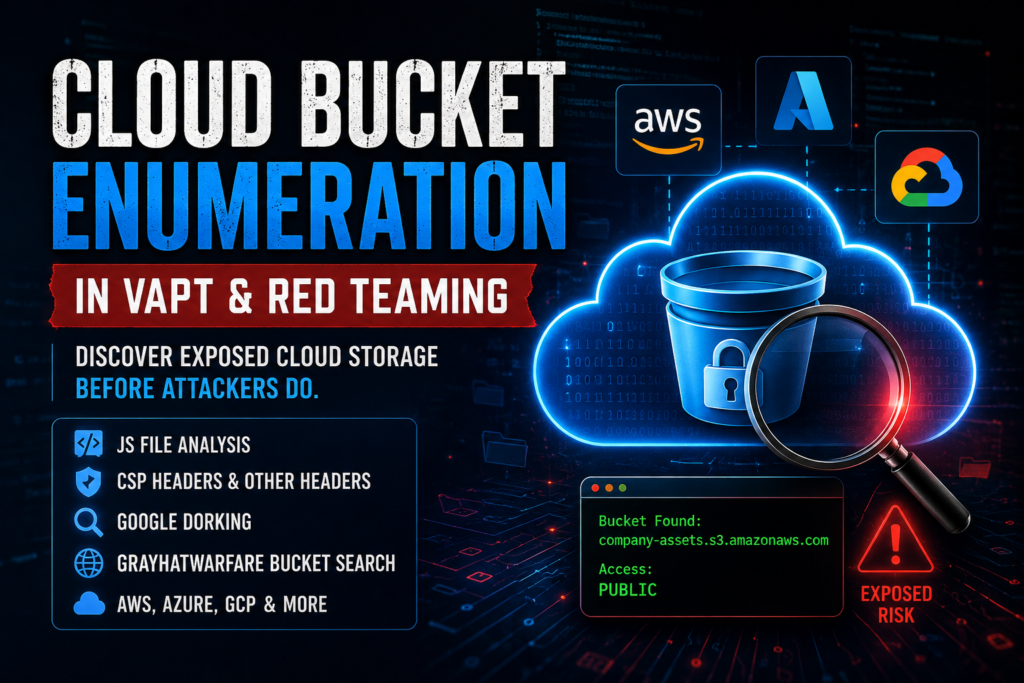
Cloud storage has become a critical component of modern applications. Organizations frequently rely on cloud object storage services to host static assets, backups, application artifacts, logs, mobile application resources, and even sensitive operational data. Common cloud storage services include:
- AWS S3 Buckets
- Azure Blob Storage
- Google Cloud Storage Buckets
Misconfigured cloud storage continues to contribute to data exposure incidents because bucket names are often predictable, permissions become overly permissive, or cloud assets unintentionally leak through application artifacts and public infrastructure. Research continues to show attackers actively target exposed cloud storage resources. This article explores practical cloud bucket discovery techniques commonly used during the below activities:
- Web Application VAPT
- External Attack Surface Assessments
- Red Team Engagements
- Bug Bounty
- Cloud Security Reviews
Why Cloud Bucket Enumeration Matters
Cloud bucket enumeration plays a critical role in Vulnerability Assessment and Penetration Testing (VAPT) and Red Teaming because cloud storage services often contain highly valuable assets sand occasionally sensitive information that was never intended for public exposure. Cloud buckets frequently contain:
- Application backups
- Source archives
- Mobile APK artifacts
- CI/CD build outputs
- Logs
- Images and static content
- Internal documentation
- Configuration files
Public exposure or excessive permissions may result in:
- Sensitive data disclosure
- Credential leakage
- Internal infrastructure exposure
- Attack surface expansion
- Reconnaissance opportunities
Cloud storage resources commonly use globally unique bucket naming conventions, making discovery techniques valuable during security assessments.
Cloud Bucket Enumeration Techniques in VAPT & Red Teaming has also been discussed and demonstrated in the Youtube Video mentioned below.
Cloud Bucket Enumeration Techniques
1. HTML/JavaScript Files Analysis:
JavaScript remains one of the highest-value recon sources during VAPT and Red Teaming. Front end developers frequently hardcode Cloud Bucket URL’s, CDN References, Storage Endpoints, Image Hosting Paths etc.
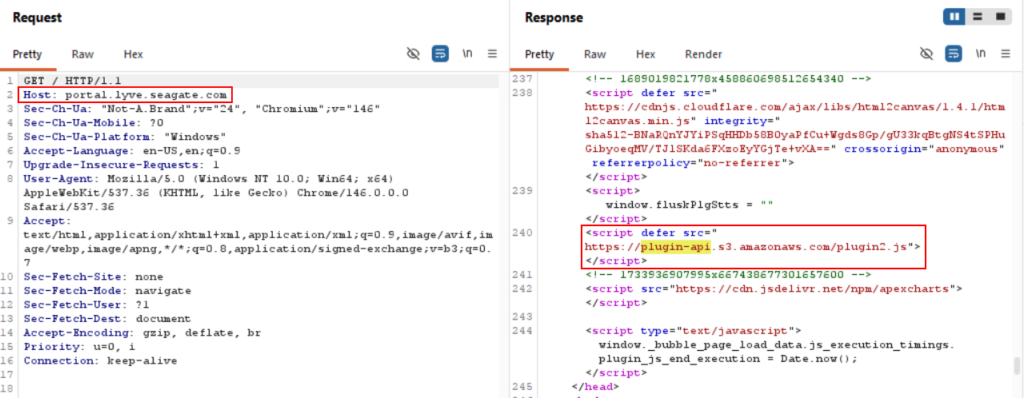
Example Patterns:
https://company-assets.s3.amazonaws.com/
https://storage.googleapis.com/app-static/
https://companyuploads.blob.core.windows.net/
Useful regex patterns:
AWS S3:
[a-zA-Z0-9.-]+.s3.amazonaws.com
Azure Blob:
[a-zA-Z0-9-]+.blob.core.windows.net
Google Cloud Storage:
storage.googleapis.com\/[a-zA-Z0-9._-]+
Tools commonly used:
- LinkFinder
- Katana
- Gau
- WaybackURLs
- Custom regex parsers
2. CSP Header & Header Analysis:
Content Security Policy headers often reveal infrastructure relationships, they are known to disclose s3 buckets also. Apart from CSP other Headers also leak bucket details.
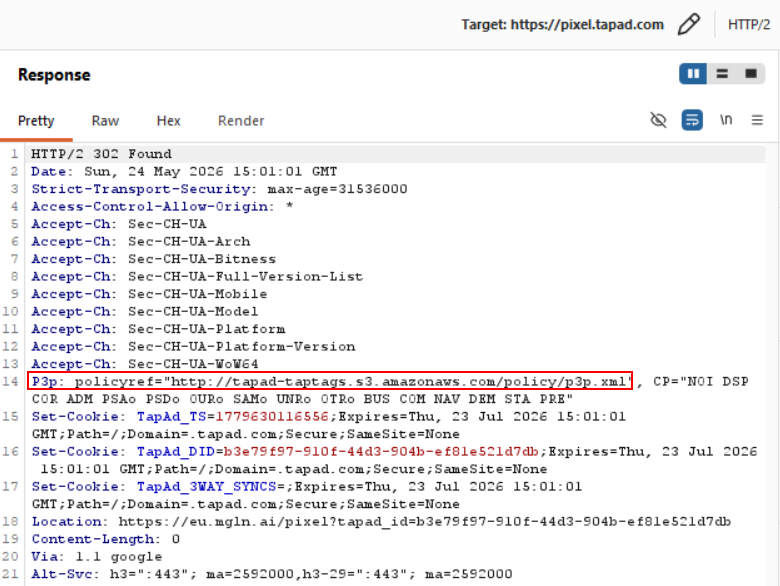
Content-Security-Policy:
img-src 'self'
https://company-static.s3.amazonaws.com
https://cdn.company.com
Potential discoveries:
- S3 endpoints
- Azure blob references
- Google storage assets
- CDN origins pointing to buckets
Headers also sometimes expose legacy infrastructure paths that no longer appear in frontend code.
3. Google Dorking:
Search engine indexing frequently exposes cloud assets.
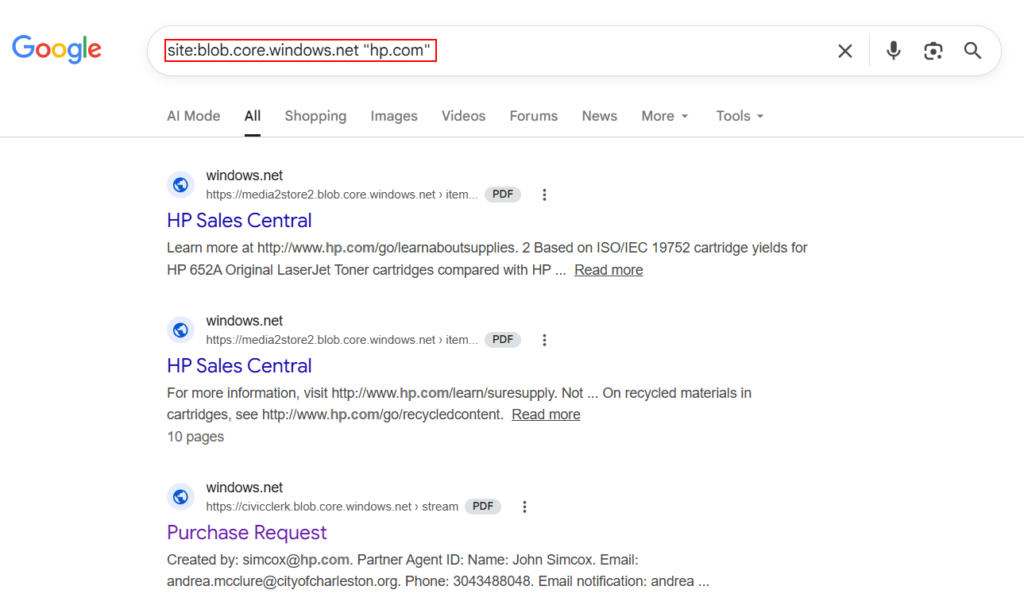
AWS:
site:s3.amazonaws.com companyname
site:amazonaws.com "confidential"
Azure:
site:blob.core.windows.net companyname
Google Cloud:
site:storage.googleapis.com companyname
General cloud artifact discovery:
site:amazonaws.com ext:sql
site:blob.core.windows.net ext:bak
site:storage.googleapis.com ext:zip
File-focused discovery:
site:s3.amazonaws.com password
site:blob.core.windows.net backup
site:storage.googleapis.com config
Google indexing often surfaces historical or forgotten assets.
4. Historical Archive Reconnaissance:
Archived infrastructure frequently reveals storage locations. Useful sources:
- Gau
- WaybackURLs
- Historical JS bundles
- Old API documentation
Example findings:
old-backups-company.s3.amazonaws.com
company-mobile-assets.storage.googleapis.com
companyblobstorage.blob.core.windows.net
Historical enumeration remains valuable because cloud resources may survive long after application migrations.
5. Subdomain Enumeration Correlation:
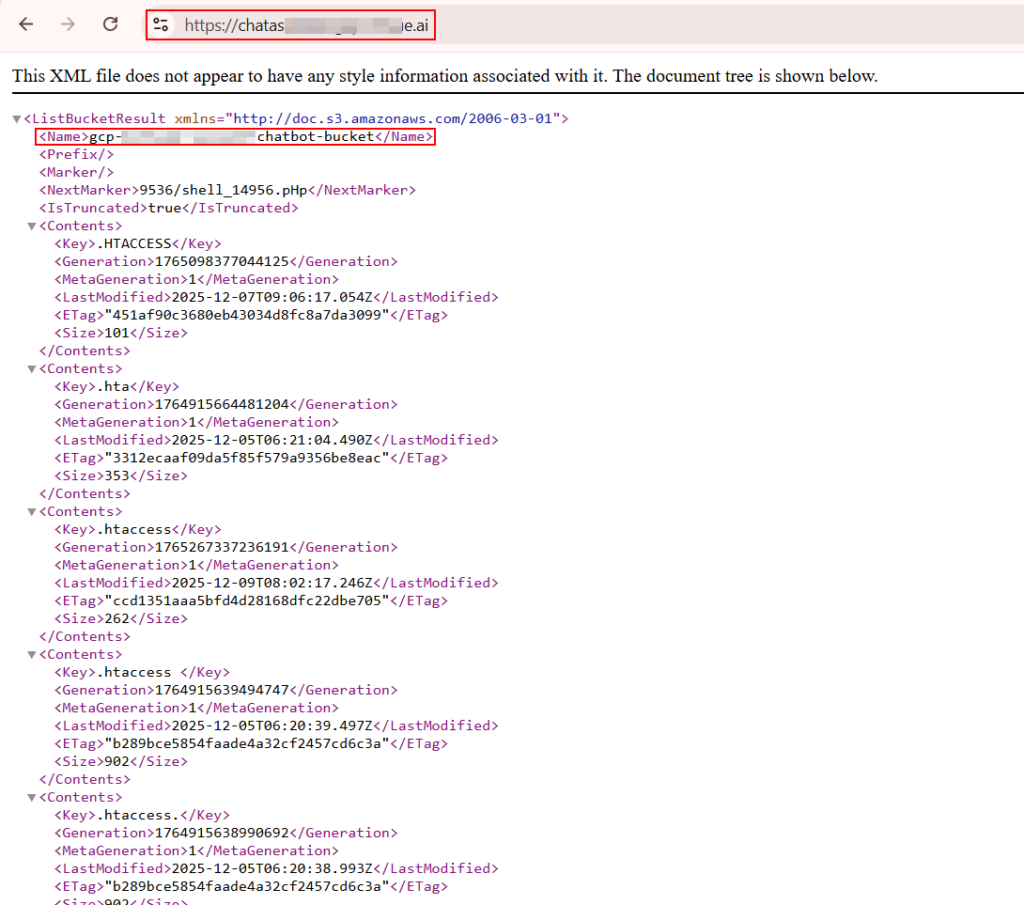
During cloud enumeration activities, subdomain analysis can sometimes reveal cloud storage infrastructure directly exposed through organizational naming conventions or legacy configurations. In some environments, subdomains may point to cloud storage services such as AWS S3 buckets, Azure Blob Storage containers, or Google Cloud Storage resources used for hosting static assets, backups, media files, application resources, or internal documents. In certain cases, misconfigurations may allow object listing functionality, where directory or file listings become accessible, potentially exposing information that was not intended for public visibility. Identifying subdomains mapped to cloud storage during VAPT or Red Team engagements helps security teams understand external attack surfaces, discover legacy assets, and assess whether cloud storage permissions align with security best practices. Bucket names often align with:
- Company branding
- Product names
- Environment names
Examples:
- prod-assets-company
- staging-backups-company
- mobile-company-storage
Tools/Techniques commonly used:
- Subfinder
- Assetfinder
- Certificate Transparency
- ASN intelligence
Bucket naming conventions commonly derive from organizational naming patterns. Academic research has shown predictable naming contributes significantly to vulnerable bucket discovery.
6. Public Bucket Search Platforms:
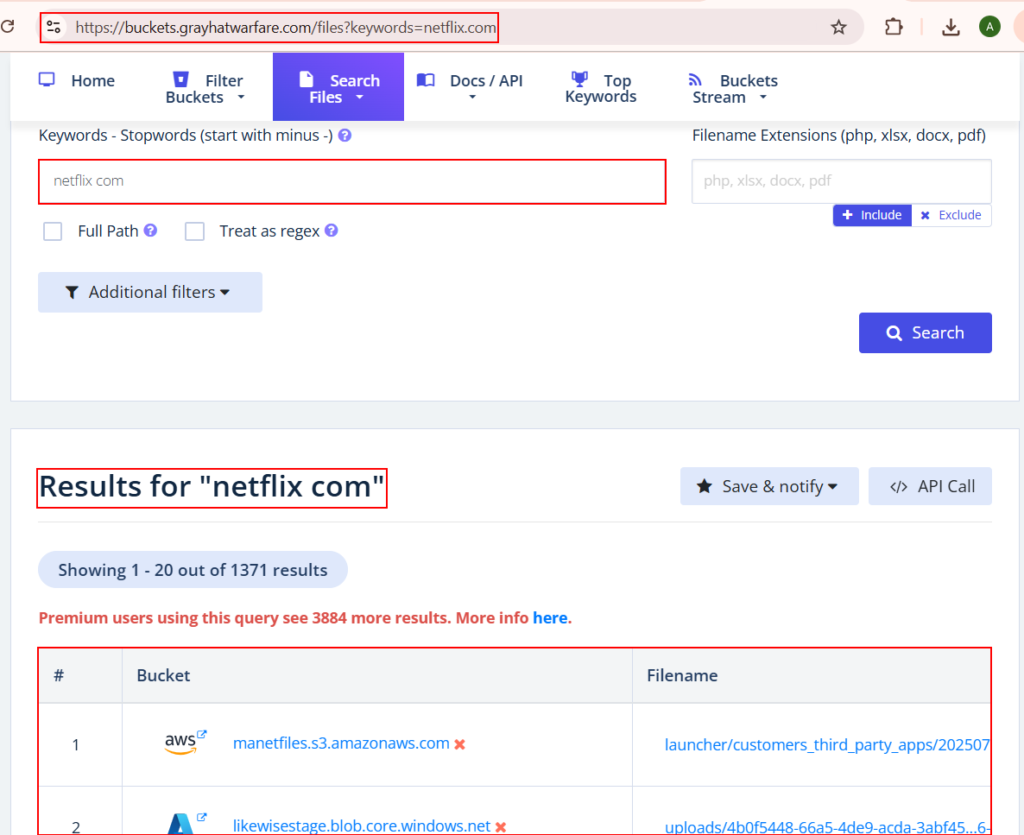
One useful recon source is GrayHatWarfare Bucket Search as It indexes publicly accessible cloud storage resources across providers including:
- AWS
- Azure
- GCP
- DigitalOcean
It supports searches using:
- Keywords
- Extensions
- File paths
- Bucket names
The platform provides indexing and search capabilities for publicly exposed cloud resources.
7. Mobile Application Analysis:
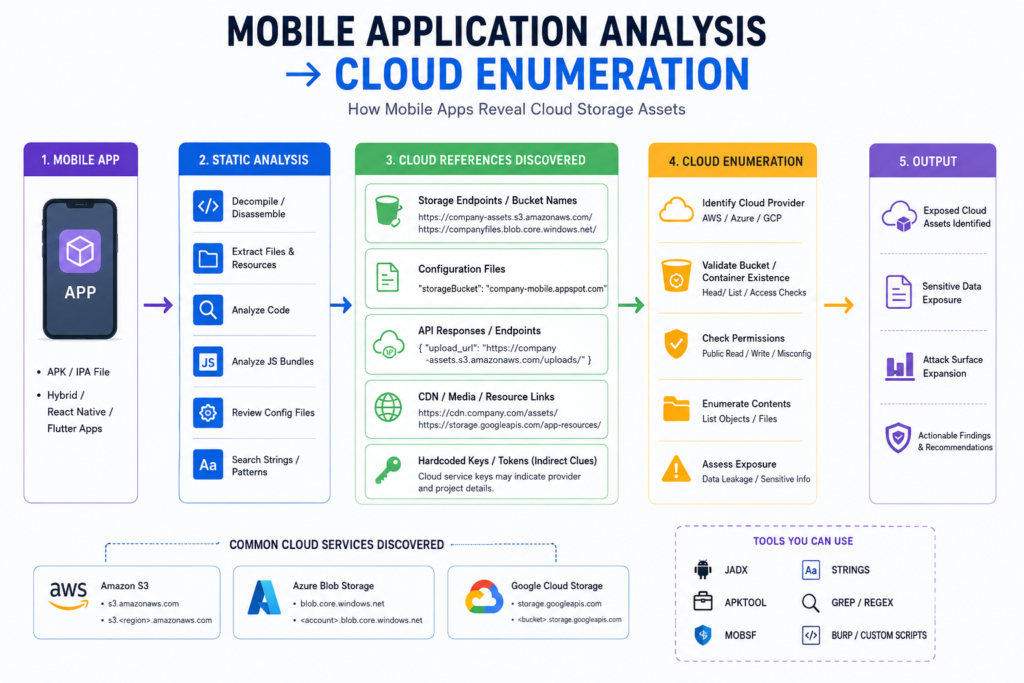
Mobile applications often communicate directly with cloud services for storing images, user uploads, application resources, logs, backups, analytics data, or API-related assets. During security assessments, analyzing APK or IPA files can reveal references to cloud storage infrastructure such as AWS S3 buckets, Azure Blob Storage containers, or Google Cloud Storage buckets. Decompiled mobile applications may expose storage endpoints, bucket names, CDN URLs, Firebase configurations, API responses, environment configurations, or hardcoded cloud references that help security teams map cloud attack surfaces and identify misconfigurations. Hybrid applications and React Native or Flutter apps may also contain JavaScript bundles that reference cloud-hosted assets, making mobile application analysis an important component of cloud enumeration activities.
8. GitHub Based Cloud Enumeration
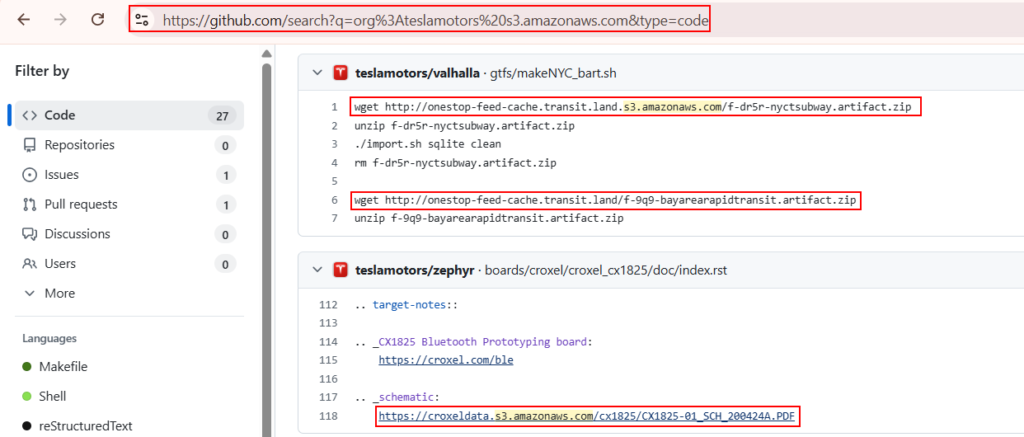
GitHub is another valuable source during authorized VAPT and Red Team assessments because developers frequently expose cloud infrastructure references in repositories, CI/CD files, IaC templates, documentation, mobile app code, or historical commits. Rather than finding cloud buckets directly, GitHub often helps uncover bucket names, storage endpoints, project identifiers, or cloud configuration references that become inputs for cloud attack surface mapping.
Proposed Practical Workflow
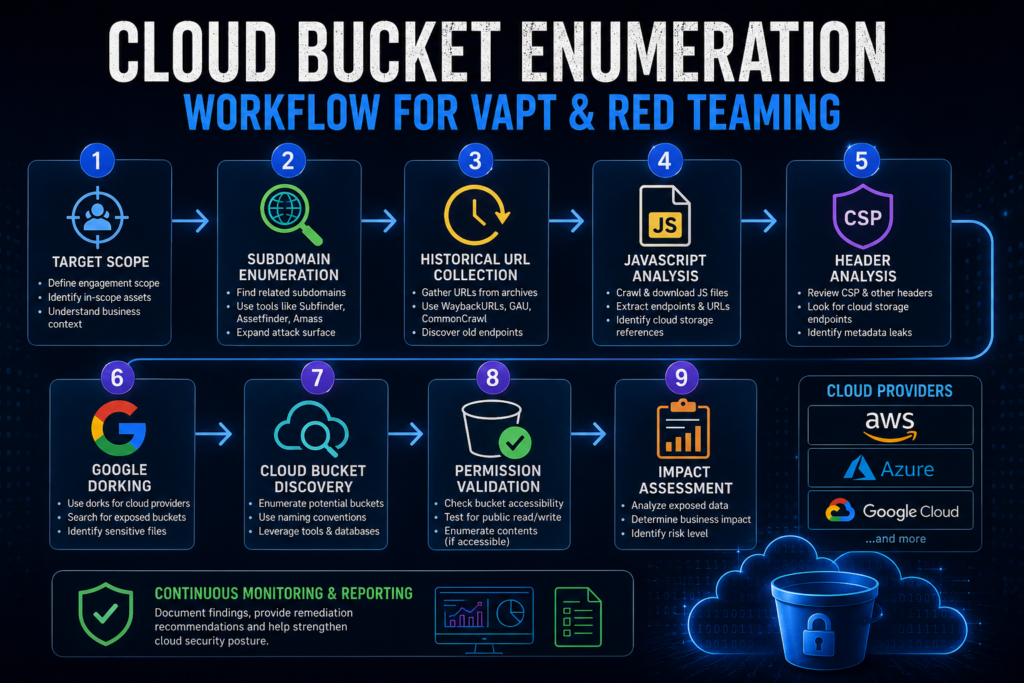
Cloud bucket enumeration remains a high-value reconnaissance technique in VAPT and Red Teaming. Public exposure rarely originates from a single failure. More commonly, cloud assets become discoverable through small information leaks:
- JavaScript artifacts
- CSP headers
- Historical archives
- Search engine indexing
- Mobile application analysis
- Naming conventions
Strong cloud security requires treating storage infrastructure as part of the external attack surface—not merely backend infrastructure.